AMOLED vs. TFT: Which Display Technology Is Best?

Posted on: May 9, 2022

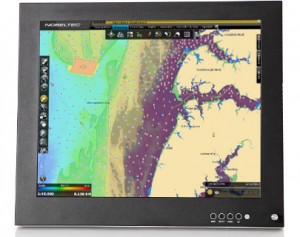
Titan Commercial Grade LED Display

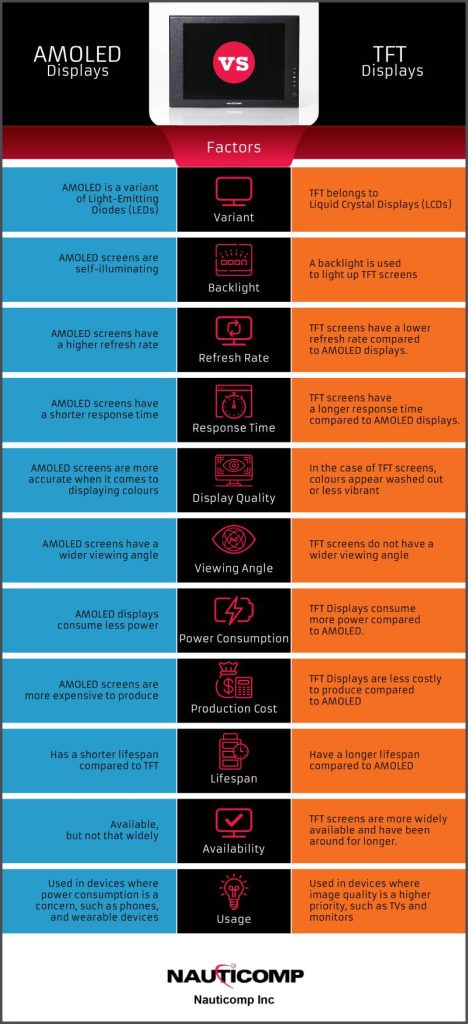
AMOLED and TFT are two types of display technology used in smartphones. AMOLED (active-matrix organic light-emitting diode) displays are made up of tiny organic light-emitting diodes, while TFT (Thin-Film Transistor) displays use inorganic thin-film transistors.

AMOLEDs are made from organic materials that emit light when an electric current is passed through them, while TFTs use a matrix of tiny transistors to control the flow of electricity to the display.

Both technologies have their own advantages and disadvantages. So, how do you know which one is best for your needs? We compare these two technologies below.

What Are the Main Differences between AMOLED and TFT Displays? 

AMOLED vs TFT Displays

  • Backlight: One of the main differences between AMOLED and TFT displays is how they are lit up. A backlight is used to light up TFT screens, while AMOLED screens are self-illuminating. This means that TFT displays require more power to operate than AMOLED displays.
  • Refresh Rate: Another key difference between AMOLED and TFT displays is the refresh rate. The refresh rate is how often the image on the screen is updated. AMOLED screens have a higher refresh rate than TFT screens, which means that they can display images more quickly and smoothly.
  • Response Time: The response time is how long it takes for the pixels to change from one colour to another. AMOLED screens have a shorter response time than TFT screens..
  • Colour Accuracy/Display Quality: AMOLED screens are more accurate when it comes to displaying colours. This is because each pixel on an AMOLED screen emits its own light, which means that the colours are more pure and true to life. TFT screens, on the other hand, use a backlight to illuminate the pixels, which can cause the colours to appear washed out or less vibrant.
  • Viewing Angle: The viewing angle is the angle at which you can see the screen. AMOLED screens have a wider viewing angle than TFT screens, which means that you can see the screen from more angles without the colours looking distorted.
  • Power Consumption: One of the main advantages of AMOLED displays is that they consume less power than TFT displays. This is because the pixels on an AMOLED screen only light up when they need to, while the pixels on a TFT screen are always illuminated by the backlight.
  • Production Cost: AMOLED screens are more expensive to produce than TFT screens. This is because the manufacturing process for AMOLED screens is more complex, and the materials used are more expensive.
  • Lifespan: AMOLED screens have a shorter life span than TFT screens since the organic materials used in AMOLED screens can degrade over time.
  • Availability: TFT screens are more widely available than AMOLED screens and have been around for longer. They are typically used in a variety of devices, ranging from phones to TVs.
  • Usage: AMOLED screens are typically used in devices where power consumption is a concern, such as phones and wearable devices. TFT screens are more commonly used in devices where image quality is a higher priority, such as TVs and monitors.

Which Display Technology Is Best?

AMOLED and TFT are two different types of display technology. AMOLED displays are typically brighter and more vibrant, but they are more expensive to produce. TFT displays are cheaper to produce, but they are not as bright or power efficient as AMOLED displays.

The display technology that is best for you will depend on your needs and preferences. If you need a screen that is bright and vibrant, then an AMOLED display is a good choice. If you need a screen that is cheaper to produce, then a TFT display is a good choice. However, if you’re worried about image retention, then TFT may be a better option.

Ultimately, it’s up to you to decide which type of display is best for your needs.

Nauticomp Inc. provides world-class fully customizable touchscreen displays for commercial and industrial settings. With features like sunlight readability, brightness adjustability, infrared lighting, full backlighting, all-weather capabilities, etc., our displays are second to none. Contact us today to learn more.

What Is the Difference between AMOLED and LCD Displays?

Posted on: March 10, 2022

Glass Bridge Monitors

Screen technology, quality, and visibility are just some of the most important factors to consider when choosing between AMOLED and LCD displays. Average consumers might not necessarily know the difference between these two types of devices or why one is preferable to the other. In this article, we’ll draw comparisons between LCD vs. AMOLED displays so you can decide which type of screen is the right choice for your personal or professional applications.

What Is AMOLED and Super AMOLED?

First, it’s important to note that AMOLED and Super AMOLEDs are both types of OLED display technology. OLED stands for Organic Light Emitting Diode. This is a type of thin-film display technology that’s built directly into the screen. The electroluminescent materials, also known as the light emitting diodes, immediately light up when they contact electricity.

AMOLED is an acronym that stands for active-matrix light-emitting diodes. This is a step up from traditional OLEDs. The basic concept of lighting up crystal diodes using electricity is the same, but the execution is slightly different. Each pixel inside of AMOLED displays consists of individual thin-film transistor strips that light up when an electrical current runs through them.

Super AMOLED devices are also descendants of the OLED technological display family. Commonly used for smartphones, AMOLEDs feature innovative touch technology integrated directly into the screen rather than including a separate thin film on top of the screen.

What Is the Difference between AMOLED vs. LCD Displays?

If you frequently use electronic devices, chances are very high that you’ve most likely come across an LCD (liquid crystal display) in some capacity. Common applications for LCDs include electronic billboards, computer and laptop monitors, digital cameras, portable electronic games, and the list goes on. LCDs are flat-panel displays. They consist of liquid crystal films that are sandwiched between two thin polarized glass layers. Backlighting is used to activate the crystals and illuminate the screen to present the desired image to the user.

Here’s a table that compares the differences between industrial LCDs vs. AMOLED displays.

AMOLED LCD
Picture Quality – Excellent picture quality with vivid colours, brightness, and contrast

– No backlighting means the display powers off pixels when showing the black portions of an image

– Brighter overall picture quality, colours are true to life
Image pixels and colours – Enhanced, bright, and vibrant colour contrast

– Pixels supply their own light source, which results in more consistent lighting throughout the entire screen without any dark or light spots

– Subdued, but accurate colour contrast and visibility

– Dark and light spots may occur throughout the screen if each pixel doesn’t receive the same amount of backlighting

Screen size and technology – AMOLEDs eliminate the need for a backlighting layer, so the screens can be made thinner – LCDs feature a backlighting layer, they require a thicker design, and will always be bulkier than AMOLEDs
Screen burn – Eventually, the pixels will burn out faster or get stuck showing only certain colours with continued use

– Icon shadowing is a bigger concern for laptops and smartphones, but you can prevent this from happening by moving your icons around every so often

– Screen burn isn’t an issue for LEDs because they rely on backlighting
Outdoor visibility and viewing angles – Side viewing angles aren’t ideal, better to view the device straight-on – Superior off-axis viewing angles and sunlight readability due to IPS technology
Reliability and durability – More susceptible to pixel burnout over time; if one pixel burns out, then they can all go out or get stuck

– More fragile and can crack if damaged or dropped

– Far more durable and can withstand more pressure or greater impact

– Backlighting prevents pixels from burning out

Power efficiency and battery consumption – More energy-efficient when showing black because the device shuts off pixels that don’t need to be used; this helps the battery last longer on a single charge – Backlight is always on, which reduces energy-efficiency and eats up battery life a lot faster
Flexibility and adaptability – Flexible, which means they’re ideal for curved screen designs especially used for wearable technology (watches, go-pros, etc.) – They can’t be bent, moulded, or made into a curved design and this limits their functionality
Display prices – Higher price point because they cost more to design and manufacture – Require more layers, but they use a slightly more affordable technology and have been around for years, which means all of the kinks have already been ironed out of the design and manufacturing process

Which Is Better: AMOLED or LCD?

That depends on what you need the device for and how much you are willing or able to spend. For basic and everyday applications, you’re probably better off purchasing a standard LCD device. But if you’re looking for enhanced picture quality with excellent colour contrast and have an expansive budget, then AMOLED is probably the right device for you.

At Nauticomp Inc., we’re always at the forefront of state-of-the-art commercial and industrial display design and manufacturing. Our devices are customizable and suitable for a wide range of applications from military ops to retail POS, and so much more. Contact us today to learn more.