Guide for Choosing the Best Marine Displays for Your Needs

Posted on: September 14, 2022

Marine LCD Monitors

If you’re in the market for a new marine display, you may be wondering what the best option is for your needs. With so many different types and brands of displays on the market, it can be difficult to know which one is right for you. In this article, we’ll discuss some of the factors you should consider when choosing a marine display, and we will recommend some of the best displays on the market for rugged and waterproof use.

Things to Know Before Buying Marine Displays

Before buying marine displays for your requirements, it’s important to consider the factors listed below:

Intended Use:

The first thing you’ll need to determine is how you plan to use your marine display. Are you looking for a display to use on your boat’s dashboard? Or do you need a portable display that can be used for navigation and other purposes?

Multifunction Display (MFD) or Marine Display:

MFDs are multi-functional devices that can include features like GPS, fish finders, and chartplotters. Marine displays are typically just for navigation purposes. If you need an MFD, you’ll want to look for one that has the specific features you need. If you just need a marine display, you can typically find one that’s less expensive.

Required Number and Size of Marine Displays:

You’ll also need to decide how many displays you need and what size you need them to be. This will depend on the size of your vessel and how much space you have to work with. If you have a larger vessel, you may need more than one display. If you’re just using your marine display for navigation, you may only need one small display.

Display Mounting and Installation:

Another important factor to consider is how you’ll be mounting and installing your display. Some displays come with mountings and brackets that make installation easy. Others may require more work to install. You may also need to purchase additional mountings or brackets separately.

Video Connection and Input Options:

You’ll also want to consider what type of video connection and input options you need. Some displays only have HDMI inputs, while others may have multiple input options, including VGA, DVI, and USB.

Touchscreen or Non-Touchscreen:

Some marine displays are touchscreen, while others are not. Touchscreen displays can be more convenient to use, but they may be more expensive.

Display Resolution:

Another important factor to consider is the resolution of the display. A higher resolution display will provide a sharper image.

Brightness:

Since marine displays will be used in outdoor conditions, it’s important to choose a display that is bright enough to be easily visible in direct sunlight. Look for displays that have a high nits rating, which indicates the amount of light the display can produce.

Sunlight Readability and Night Visibility:

It’s important to choose a display that you can see clearly, both in direct sunlight and at night. Many displays have anti-glare coatings and backlighting that improve visibility in all conditions.

Widescreen or Square Displays:

Marine displays come in both widescreen and square formats. Widescreen displays are typically better for navigation purposes, while square displays may be a better option for MFDs.

Marine Display Power Supply:

You’ll also need to consider the power requirements of your marine display. Some displays can be powered by a 12-volt battery, while others require a 110-volt power source.

Waterproof and Rugged:

Finally, you’ll want to make sure that your display is waterproof and rugged. Marine environments can be tough on electronics, so you’ll want a display that can withstand the elements.

Nauticomp’s Best Rugged Marine Displays

Now that you know what factors to consider when choosing a marine display, let’s take a look at some of our best rugged marine displays.

Glass Bridge Elite
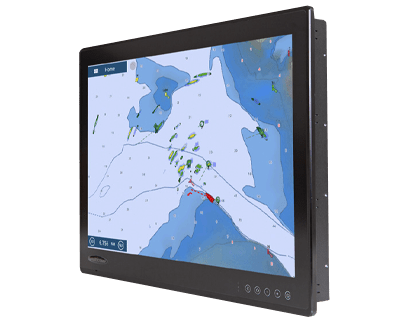
Glass bridge elite


The Glass Bridge Display is a multi-functional device that has eight source inputs. Each input can be easily controlled through the external GB Commander keypad. The user can either select inputs manually or set the controller for auto selection. Additionally, they have the ability to view any source in a PIP window and adjust its transparency using our unique “Alpha Blend” feature. The 12”, 15”, and 19” models are available in both Daylight and Sunlight variants, each with their own respective three-year limited parts warranty.

[button link=”https://nauticomp.com/outdoor-marine-displays/glass-bridge-elite/” size=”large” target=”_blank” color=”orange”]Learn More[/button]

Signature II Series
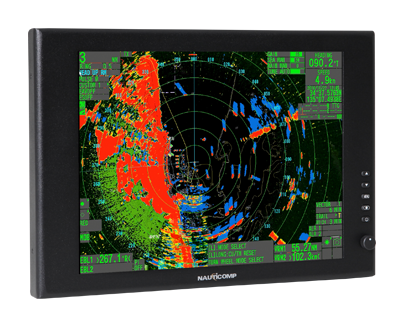
LED Backlight Technology

The Signature II Series line of displays from Nauticomp provides an economical, rugged solution for both marine and military applications. These displays are newly updated with highly efficient LED backlight technology and include dim to red technology on all inputs. They also feature a slim case design that makes them ideal for use in more confined spaces, as well as a dial that allows you to easily control the increased dimming and brightness settings. The 12”, 15”, and 19” models in the Signature II Series come with a combination of six inputs, 1 DVI, 2 VGA, and three composites.

[button link=”https://nauticomp.com/outdoor-marine-displays/signature-ii-series-displays/” size=”large” target=”_blank” color=”orange”]Learn More[/button]

Genesis Series
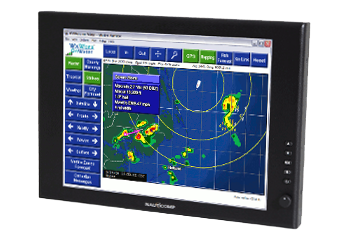
sunlight readable monitor

The Genesis Series displays are tough and affordable for both marine and military purposes. With highly efficient LED backlight technology and two inputs (1 DVI & 1 VGA), the 15” and 19” displays are the perfect combination of cutting-edge technology and user-friendly design. Nauticomp’s line of rugged displays contain dim to red technology and a slim case design that allows users to put a bigger display in a smaller space. They are also available with touchscreen technology.

[button link=”https://nauticomp.com/outdoor-marine-displays/genesis-series-displays/” size=”large” target=”_blank” color=”orange”]Learn More[/button]

Hammer Display Series
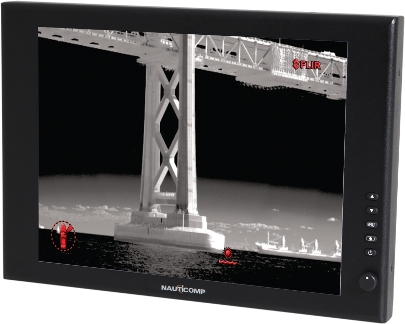
night vision displays

Nauticomp has always been on the ball when it comes to dependable, long-lasting technology. When it comes to delivering reliable, user-friendly information displays, the Hammer Series is the front-runner for government agencies. The toughness of the Hammer’s design, image clarity, waterproof feature, and sunlight readability are all in high demand by today’s technical warrior. These displays have a multi-backlight NVIS/sunlight readable option that makes life easy for today’s technical soldier. COTS or custom-tailored configurations are Nauticomp’s specialty—on tried and tested components.

[button link=”https://nauticomp.com/commercial-displays/hammer-nvis-displays/” size=”large” target=”_blank” color=”orange”]Learn More[/button]

Contact Nauticomp to Learn More About Marine Displays

Nauticomp Inc. has over 25 years of experience designing, manufacturing, and selling the best marine displays on the market. Our team of experts is always available to answer any questions you may have and help you find the perfect display solution for your needs. Contact us today to learn more about our products and how we can help you take your business to the next level.
Everything You Need to Know About ECDIS in the Marine Industry

Posted on: July 13, 2022

marine display

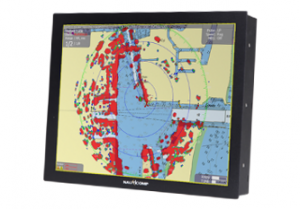
As the marine industry increasingly looks to digitize its operations, one of the most important pieces of technology that vessels are adopting is the electronic chart display and information system, or ECDIS. This system is a type of marine navigation that uses electronic navigational charts to display information about a vessel’s position and the surrounding sea.

If you are working in or supplying products or services to the marine industry, it is important to understand what ECDIS is and how it works. In this blog post, we will provide an overview of ECDIS technology and discuss some of the key considerations when implementing this system on ships.

What Is an Electronic Chart Display and Information System?

As mentioned above, an ECDIS is a maritime navigation device that displays a vessel’s position and the surrounding sea using digital charts. This system is increasingly being used by vessels as the marine industry looks to digitize its operations.

ECDIS is now a mandatory navigation system on ships trading in European waters. This system replaces the traditional paper charts used on board vessels for navigation. ECDIS presents navigational data on a computer screen, allowing officers to navigate more safely and efficiently.

Types of ECDIS

There are two different types of ECDIS available on the market, each with its own advantages and disadvantages. Below we discuss the different options in more detail.

Raster Navigational Charts

Raster navigational charts are digital images of paper charts. These charts are created by scanning a paper chart and converting it into a digital image file. 

The main advantage of raster chart display systems is that they are relatively easy to use and understand. This type of system is also less expensive than vector chart display systems.

The disadvantages of raster charts include the fact that they can be less accurate than vector charts and they can be more difficult to update.

Vector Navigational Charts

Vector navigational charts are created using electronic vector data. This data is more accurate than raster data, making vector chart display systems more precise tools for marine navigation.

The main disadvantage of vector charts is that they can be more expensive than raster charts. Another downside of vector charts is that they can be more difficult to use and understand than raster charts.

Why Use Bigger Marine Monitors for ECDIS?

Marine displays have to meet the strictest standards for quality and durability. That’s why marine LCDs and monitors are designed specifically for use in harsh marine environments.

When it comes to ECDIS, bigger is usually better. A larger marine display will give you a better view of the digital charts and information being displayed. This is especially important when navigating unfamiliar waters.

Some marine displays are even designed to be used in multi-display setups, giving you an even larger view of the navigational data.

Multi-touch marine displays are also becoming more popular, as they offer a more intuitive way to interact with the ECDIS system. Waterproof marine displays are another option to consider, as they can be used in all weather conditions.

Safety Parameters for an ECDIS Marine Displays

There are several safety parameters that should be considered when setting up an ECDIS marine display. These settings include:

  • The safe navigation area
  • The safe distance from land
  • The depth of water
  • The speed of the vessel
  • The type of vessel

Key Considerations for Implementing ECDIS

There are a few key considerations to keep in mind when implementing an ECDIS system on board a vessel.

First, the system must be able to meet the specific navigational needs of the vessel. Second, the system must be easy to use and understand. And third, the system must be able to integrate with other onboard systems.

Some marine displays are designed specifically for use with ECDIS systems. These displays usually have larger screen sizes and higher resolutions, making them ideal for viewing digital charts and navigational data.

What Are the ECDIS Marine Display Requirements?

There are several requirements that must be met in order to use an ECDIS marine display.

  • Must Display SENC Information: The marine display must be able to display System Electronic Navigational Chart information. SENC is the digital chart data that is used by the ECDIS system.
  • Must Be DGNSS Compatible: The marine display must be compatible with Differential GPS (DGNSS) systems.
  • Must Meet IMO Standards: The marine display must meet the standards set by the International Maritime Organization (IMO).
  • Must Be Type-Approved: The marine display must be type-approved by a recognized marine organization. Some marine displays are specifically designed for use with ECDIS systems and have been type-approved by the IMO. Marine displays have to meet the strictest standards for quality and durability.
  • Must Show the Information Scale: The marine display must be able to show the correct scale for the navigational data being displayed.
  • Must Display Screen Specification: The marine display must have a screen that is large enough to show the navigational data being displayed.
  • Must Show Chart Features: The marine display must be able to show all of the features that are required for safe navigation.
  • Must Have Data Overlay: The marine display must be able to overlay the navigational data on top of the chart data.
  • Must Have Symbols, Fonts, and Colours: The marine display must be able to show the required symbols, fonts, and colours.

Contact Nauticomp to Know About the Different Marine Monitors

Vessels of all sizes are increasingly using ECDIS to navigate their way through the water, and as this technology continues to develop, it is important that mariners understand how these systems work.

If you’re looking for more information about electronic chart displays or any other marine monitors, be sure to get in touch with Nauticomp, Inc. We provide world-class fully customizable touchscreen displays for commercial and industrial settings and can help you find the perfect system for your vessel. Contact us today to learn more.

Understanding Weatherproof and Waterproof IP Ratings

Posted on: February 5, 2022

signature II series

Marine displays are frequently thrust into extremely harsh environmental conditions and sometimes dangerous situations. Waterproof displays that are capable of handling virtually any type of natural element have become the standard when it comes to developing state-of-the-art Marines technology. Outdoor weatherproof displays feature standardized IP ratings that indicate their level of ability to withstand exposure to moisture, dust, and dirt.

Born out of necessity for military and marines use, weatherproof display enclosures were once rare technological features. Now, they’re being used for a variety of devices including smartphones and tablets.

What Do IP Codes/Numbers Represent?

IP stands for Ingress Protection or International/Internal Protection mark. This is a standard internationally recognized rating system that indicates the performance of technological protective enclosures. IP ratings signify how effectively certain technological devices are protected against various external elements such as dust, moisture, and dirt.

Once these elements infiltrate the internal mechanisms of electronic devices, they can cause serious damage and render the device ineffectual or damaged beyond repair. The International Electrical Commission dictates the global standard for rating the performance of these protective enclosures. IP ratings consist of two digits that represent different characteristics:

  • The first number indicates the level of solid particle (e.g., dust, dirt, crumbs, etc.) protection the enclosure provides
  • The second number indicates the level of liquid particle (water droplets, water submersion, spilled drink, etc.) protection the enclosure provides

What Is an IP68 Waterproof Display Rating?

An IP68 waterproof rating is the very highest standard for any device. IP68 enclosures offer total protection against the ingress of any type of foreign substances. Six is the top of the scale for protection against solid particle ingress and 8 is the highest level of protection against liquid ingress.

What Is an IP65 and IP53 Rating?

Certain devices can have multiple IP ratings. These ratings indicate that the devices were tested for numerous different types of weather and environmental conditions. Each rating indicates the enclosure’s protective performance in those specific environments. An IP68 rating indicates that a device can handle being submerged in water that’s deeper than one meter.

If a device also has an IP65 rating, this indicates that it can also withstand being sprayed by a liquid or exposed to heavy rain and other wet conditions. An IP53 rating is significantly lower in both regards. These devices are mostly resistant to debris and dust, but they have fairly low resistance to contact with liquid.

What Are Some Applications for IP68 Enclosures?

Since IP68 enclosures are classified as completely waterproof computer monitors, this makes them the ideal choice for virtually any type of extremely demanding outdoor applications.

As a result, Marine and military waterproof LCD monitors are typically required to have a standard IP68 rating to ensure safe and effective operation at all times.

Other uses and applications can include:

  • Devices that are used in areas with high risk of flooding or moisture exposure
  • Water treatment facilities
  • Devices that are primarily for any type of outdoor use

Nauticomp Inc.’s Waterproof and Weatherproof LCD Monitors for the Marine Industry

Nauticomp Inc. is one of the leading suppliers of high-quality, reliable, and durable Marine and military-grade outdoor weatherproof and waterproof displays. We have a range of outdoor weatherproof displays such as the Glass Bridge Elite, the Signature II Series, and the Genesis Series that are always prepared for the task. Contact us today to learn more about our products and how they can enhance your mission.

Benefits of Using ECDIS Over Paper Charts for Marine Navigation

Posted on: September 25, 2019
Marine Navigation
iStock.com/Denys Yelmanov

The Electronic Chart Display and Information System (ECDIS) is a sophisticated route charting, planning, and navigational system that allows members of the Marines Corps to accurately map out their voyages and minimize risk along the way. This innovative technology has been proven to help companies avoid and mitigate potentially dangerous situations such as poor weather conditions, natural disasters, and security threats by accurately alerting crewmembers of impending risks and helping them reroute their initial trajectories. Not only is this essential to the safety and survival of Marines Corps officers, but it’s also useful for ensuring national security.

How Does ECDIS Work?

The purpose of ECDIS is to replace paper charts altogether and make them obsolete. ECDIS works in conjunction with rugged Marines displays and other technologies including GPS (Global Positioning Systems) and in compliance with the SOLAS Convention to enhance overall navigational safety procedures.

ECDIS also takes a lot of pressure off of crew navigators by informing them of potential risks on route to their destination and offering safer alternate route options. Ship navigators can use this information to then gauge the safety risks of their projected routes and make necessary updates and adjustments.

What Are the Advantages of Using ECDIS Technology?

Aside from the heightened safety intel, there are a lot of advantages to using ECDIS technology in Marines operations.

Here are just a few of them:

Real-Time Monitoring

As mentioned, ECDIS allows for the utmost accuracy when it comes to real-time monitoring. Navigators receive up-to-the-minute updates regarding their current route trajectory. In the event of a potential security or safety risk, the system will present them with a number of possible route alternatives that are much safer.

User-Friendly Interface


Even though Marine Corps crewmembers and navigators are highly trained in the latest navigational technology, it’s still important to ensure that the interface is as user-friendly and easy to comprehend as possible. This is especially true in light of potential danger when convenience and expediency are huge assets.

To make operations quick and convenient, ECDIS uses a number of other navigational equipment and softwares including Echo Sounder, GPS, RADAR, Gyro, and ARPA.

Alarms and Warning Signals


In addition to providing the ship navigator with visual and audible indications that the vessel is headed in a dangerous direction, loud alarms and warning signals will also notify the rest of the crew so that they can act quickly in the event of an emergency. This feature also relieves the ship navigator from the stressful task of having to individually notify other crewmembers, allowing them to focus on swiftly mapping out a new route.

Unparalleled Accuracy


Aside from being able to provide safe travel alternatives for Marines Corps vessels, rugged displays like ECDIS should have the capacity to accurately predict the estimated time of arrival to their destinations so that crewmembers and inland officers can aptly prepare for the mission. Another important point is that sometimes traditional charts might mistake large sea creatures or inanimate objects like debris for potential threats. To prevent unnecessary rerouting from happening, ECDIS uses precision-enhanced technology to help navigators identify these objects from great distances.

Interested in learning more about ECDIS, rugged displays, and Marines technology? Contact Nauticomp Inc., North America’s leading designer and supplier of advanced Marines displays.