How to Choose the Best Displays for Your Boats and Yachts

Posted on: October 26, 2022

You need to be strategic when choosing the best displays for your boat because your needs will heavily influence the display and other tools you use on your boats and yachts. Almost every ship or boat requires one or more marine displays, from ships to towboats, yachts, dredging equipment, cruise liners, rowboats, and commercial fishing boats.

There are numerous options to choose from when purchasing displays for your boats and yachts, because, as mentioned above, there is no one-size-fits-all for every boat or yacht.

What Is a Marine Display?

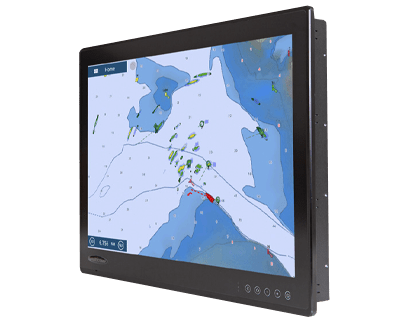
The navigation system screen, controls, information, and entertainment are all displayed on marine displays. They also improve visibility of many other systems on your boat, including navigation data, chart charting, radar, sounder, and sonar systems. Displays can also be used for dockside entertainment, web surfing, and movie screenings to keep guests and children entertained.

However, unlike other outdoor LCDs, outdoor LCD monitors used on marine vessels have various problems, such as the ability to read in bright sunlight, corrosive saltwater and air, and shock/vibration.

Say “No” to Regular Computer Monitors

The marine environment is harsh, wet, and sunny, with a high level of shock and vibration. Marine monitors are designed to thrive in this environment, but the extensive design process is required and makes them expensive.

Using the best marine display is one of the best investments when using a boat or yacht. Marine monitors can be costly, but they are worth the money you save when your regular computer monitor gets washed out in the sun or is killed by moisture on a rainy afternoon. Many boats and yacht owners mistakenly believe they can get by with regular computer monitors rather than investing in quality marine monitors that will save them the hassle of having to replace them whenever they get damaged.

Important Features to Consider in Boats or Yacht Displays

When purchasing a yacht display for your boats, there are essential things to consider, such as whether the display has a multifunctional display or not and its readability in the sun, among other things.

Typically, marine displays are only used for navigation. If you want a multifunctional display (MFD), you should buy one with the particular functionality you need.

1. Indoor and Outdoor Use:

LCDs designed for outdoor use can withstand the harshest weather conditions. They are sunlight readable, highly versatile, and have a high brightness capability to combat all levels of natural and artificial lighting. Indoor displays, on the other hand, simply do not have the same brightness capabilities as outdoor displays.

2. Sunlight Readability:

Sunlight readability refers to how well you can read a display in bright light, such as direct sunlight. The use of optically bonded glass can increase sunlight readability by up to 400%. Boats and yacht displays made of optically bonded glass can effectively reduce glares, reflections, and washed-out screens, enabling visibility in daylight.

3. Night Vision (NVIS) Compatibility:

Check if your display is compatible with night vision goggles and has LED backlights.

4. Touchscreen Monitors:

The touchscreen is not a part of the display but is attached as a separate layer. Touchscreens absorb some of the display’s brightness. Capacitive is more sensitive but less effective when wet and does not function at all while wearing gloves. Resistive can be used with gloves and withstand some water on top, but it requires more pressure and is less accurate.

5. IP Rating:

The mechanical and electrical enclosures’ level of protection against infiltration, dust, accidental contact, and water is categorized and outlined by the IP code, which also serves as a general guideline to consumers. Make sure that your display is durable and weatherproof. Marine environments can damage electronics, so get a display that can survive harsh weather.

6. Screen Size:

The bigger the display on a boat or yacht, the better the experience because it allows you to see more information, such as the chart plotter, radar, or fish finder.

Regardless of whether you mount your devices flush or on brackets, try to install the most significant screen(s) you can get on your boat or yacht. Cutting corners on displays is an unwise form of saving money, and boat/yacht owners and captains are learning to avoid it.

Nauticomp’s Marine Displays for Boats and Yachts

The following are the available marine displays for boats and yachts at Nauticomp.

Glass Bridge Elite
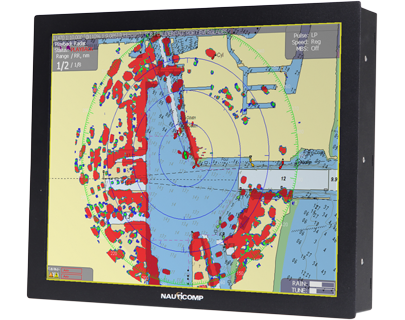
glass bridge display

The following are the unique features of Glass Bridge Elite. You can read more about our Glass Bridge Elite here.

  • High brightness, deep dimming
  • Quick access, membrane under-glass controls
  • Optically bonded, glare resistant, multi-touch glass
  • Marine compliance, ABS, IEC60945, IEC 61174, & IEC 62388
  • Easily remote controllable/integrate control into your on-board system

[button link=”https://nauticomp.com/outdoor-marine-displays/glass-bridge-elite/” size=”large” target=”_blank” color=”orange”]Learn More[/button]

Signature II Series
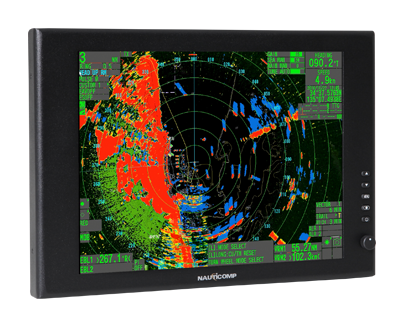
LED Backlight Technology

The Signature series has been updated with the following unique features:

  • Sunlight readable and ready for all environments
  • Waterproof and built to stringent IP 67 standards
  • Bonded glass optically enhanced for clarity
  • Multiple Inputs, including DVI, VGA, NTSC, PAL, SEC AM
  • Deep Dimming from 0 to 100% via “Potentiometer.”
  • Superior Image and scalable resolution up to SXGA
  • LED Backlighting that reduces power draw at all levels
  • Extended temperature range on 15” models
  • Picture in picture, designed to display ALL inputs

[button link=”https://nauticomp.com/outdoor-marine-displays/signature-ii-series-displays/” size=”large” target=”_blank” color=”orange”]Learn More[/button]

Genesis Series
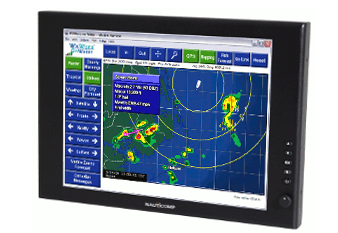
Genesis Series marine display

The Genesis series has the following unique features. Check here to learn more about Genesis series.

  • Sunlight readable and ready for all environments
  • Waterproof and built to stringent IP 67 standards
  • Bonded glass optically enhanced for clarity
  • Multiple Inputs, including DVI and VGA
  • Deep Dimming from 0 to 100% via “Potentiometer.”
  • Superior Image and scalable resolution up to SXGA
  • LED Backlighting that reduces power draw at all levels
  • Extended temperature range on 15” models

[button link=”https://nauticomp.com/outdoor-marine-displays/genesis-series-displays/” size=”large” target=”_blank” color=”orange”]Learn More[/button]

Contact Nauticomp to Learn More About Our Rugged Marine Displays

Nauticomp Inc. is known for designing, manufacturing, and selling high-end marine displays. We have been in operation for over 25 years, so rest assured you will get the best solution that caters to your needs. Contact us today to learn more about our products.
Guide for Choosing the Best Marine Displays for Your Needs

Posted on: September 14, 2022

Marine LCD Monitors

If you’re in the market for a new marine display, you may be wondering what the best option is for your needs. With so many different types and brands of displays on the market, it can be difficult to know which one is right for you. In this article, we’ll discuss some of the factors you should consider when choosing a marine display, and we will recommend some of the best displays on the market for rugged and waterproof use.

Things to Know Before Buying Marine Displays

Before buying marine displays for your requirements, it’s important to consider the factors listed below:

Intended Use:

The first thing you’ll need to determine is how you plan to use your marine display. Are you looking for a display to use on your boat’s dashboard? Or do you need a portable display that can be used for navigation and other purposes?

Multifunction Display (MFD) or Marine Display:

MFDs are multi-functional devices that can include features like GPS, fish finders, and chartplotters. Marine displays are typically just for navigation purposes. If you need an MFD, you’ll want to look for one that has the specific features you need. If you just need a marine display, you can typically find one that’s less expensive.

Required Number and Size of Marine Displays:

You’ll also need to decide how many displays you need and what size you need them to be. This will depend on the size of your vessel and how much space you have to work with. If you have a larger vessel, you may need more than one display. If you’re just using your marine display for navigation, you may only need one small display.

Display Mounting and Installation:

Another important factor to consider is how you’ll be mounting and installing your display. Some displays come with mountings and brackets that make installation easy. Others may require more work to install. You may also need to purchase additional mountings or brackets separately.

Video Connection and Input Options:

You’ll also want to consider what type of video connection and input options you need. Some displays only have HDMI inputs, while others may have multiple input options, including VGA, DVI, and USB.

Touchscreen or Non-Touchscreen:

Some marine displays are touchscreen, while others are not. Touchscreen displays can be more convenient to use, but they may be more expensive.

Display Resolution:

Another important factor to consider is the resolution of the display. A higher resolution display will provide a sharper image.

Brightness:

Since marine displays will be used in outdoor conditions, it’s important to choose a display that is bright enough to be easily visible in direct sunlight. Look for displays that have a high nits rating, which indicates the amount of light the display can produce.

Sunlight Readability and Night Visibility:

It’s important to choose a display that you can see clearly, both in direct sunlight and at night. Many displays have anti-glare coatings and backlighting that improve visibility in all conditions.

Widescreen or Square Displays:

Marine displays come in both widescreen and square formats. Widescreen displays are typically better for navigation purposes, while square displays may be a better option for MFDs.

Marine Display Power Supply:

You’ll also need to consider the power requirements of your marine display. Some displays can be powered by a 12-volt battery, while others require a 110-volt power source.

Waterproof and Rugged:

Finally, you’ll want to make sure that your display is waterproof and rugged. Marine environments can be tough on electronics, so you’ll want a display that can withstand the elements.

Nauticomp’s Best Rugged Marine Displays

Now that you know what factors to consider when choosing a marine display, let’s take a look at some of our best rugged marine displays.

Glass Bridge Elite

Glass bridge elite


The Glass Bridge Display is a multi-functional device that has eight source inputs. Each input can be easily controlled through the external GB Commander keypad. The user can either select inputs manually or set the controller for auto selection. Additionally, they have the ability to view any source in a PIP window and adjust its transparency using our unique “Alpha Blend” feature. The 12”, 15”, and 19” models are available in both Daylight and Sunlight variants, each with their own respective three-year limited parts warranty.

[button link=”https://nauticomp.com/outdoor-marine-displays/glass-bridge-elite/” size=”large” target=”_blank” color=”orange”]Learn More[/button]

Signature II Series

LED Backlight Technology

The Signature II Series line of displays from Nauticomp provides an economical, rugged solution for both marine and military applications. These displays are newly updated with highly efficient LED backlight technology and include dim to red technology on all inputs. They also feature a slim case design that makes them ideal for use in more confined spaces, as well as a dial that allows you to easily control the increased dimming and brightness settings. The 12”, 15”, and 19” models in the Signature II Series come with a combination of six inputs, 1 DVI, 2 VGA, and three composites.

[button link=”https://nauticomp.com/outdoor-marine-displays/signature-ii-series-displays/” size=”large” target=”_blank” color=”orange”]Learn More[/button]

Genesis Series

sunlight readable monitor

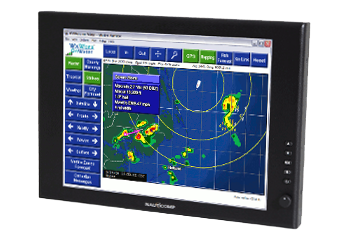
The Genesis Series displays are tough and affordable for both marine and military purposes. With highly efficient LED backlight technology and two inputs (1 DVI & 1 VGA), the 15” and 19” displays are the perfect combination of cutting-edge technology and user-friendly design. Nauticomp’s line of rugged displays contain dim to red technology and a slim case design that allows users to put a bigger display in a smaller space. They are also available with touchscreen technology.

[button link=”https://nauticomp.com/outdoor-marine-displays/genesis-series-displays/” size=”large” target=”_blank” color=”orange”]Learn More[/button]

Hammer Display Series

night vision displays

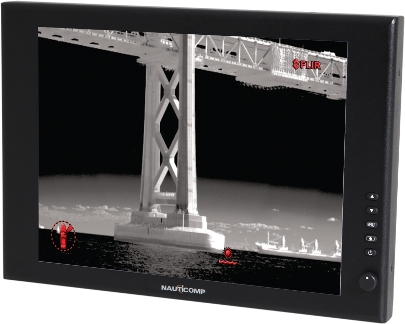
Nauticomp has always been on the ball when it comes to dependable, long-lasting technology. When it comes to delivering reliable, user-friendly information displays, the Hammer Series is the front-runner for government agencies. The toughness of the Hammer’s design, image clarity, waterproof feature, and sunlight readability are all in high demand by today’s technical warrior. These displays have a multi-backlight NVIS/sunlight readable option that makes life easy for today’s technical soldier. COTS or custom-tailored configurations are Nauticomp’s specialty—on tried and tested components.

[button link=”https://nauticomp.com/commercial-displays/hammer-nvis-displays/” size=”large” target=”_blank” color=”orange”]Learn More[/button]

Contact Nauticomp to Learn More About Marine Displays

Nauticomp Inc. has over 25 years of experience designing, manufacturing, and selling the best marine displays on the market. Our team of experts is always available to answer any questions you may have and help you find the perfect display solution for your needs. Contact us today to learn more about our products and how we can help you take your business to the next level.

Everything You Need to Know About ECDIS in the Marine Industry

Posted on: July 13, 2022

marine display

As the marine industry increasingly looks to digitize its operations, one of the most important pieces of technology that vessels are adopting is the electronic chart display and information system, or ECDIS. This system is a type of marine navigation that uses electronic navigational charts to display information about a vessel’s position and the surrounding sea.

If you are working in or supplying products or services to the marine industry, it is important to understand what ECDIS is and how it works. In this blog post, we will provide an overview of ECDIS technology and discuss some of the key considerations when implementing this system on ships.

What Is an Electronic Chart Display and Information System?

As mentioned above, an ECDIS is a maritime navigation device that displays a vessel’s position and the surrounding sea using digital charts. This system is increasingly being used by vessels as the marine industry looks to digitize its operations.

ECDIS is now a mandatory navigation system on ships trading in European waters. This system replaces the traditional paper charts used on board vessels for navigation. ECDIS presents navigational data on a computer screen, allowing officers to navigate more safely and efficiently.

Types of ECDIS

There are two different types of ECDIS available on the market, each with its own advantages and disadvantages. Below we discuss the different options in more detail.

Raster Navigational Charts

Raster navigational charts are digital images of paper charts. These charts are created by scanning a paper chart and converting it into a digital image file. 

The main advantage of raster chart display systems is that they are relatively easy to use and understand. This type of system is also less expensive than vector chart display systems.

The disadvantages of raster charts include the fact that they can be less accurate than vector charts and they can be more difficult to update.

Vector Navigational Charts

Vector navigational charts are created using electronic vector data. This data is more accurate than raster data, making vector chart display systems more precise tools for marine navigation.

The main disadvantage of vector charts is that they can be more expensive than raster charts. Another downside of vector charts is that they can be more difficult to use and understand than raster charts.

Why Use Bigger Marine Monitors for ECDIS?

Marine displays have to meet the strictest standards for quality and durability. That’s why marine LCDs and monitors are designed specifically for use in harsh marine environments.

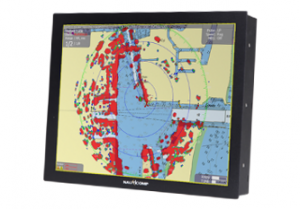
When it comes to ECDIS, bigger is usually better. A larger marine display will give you a better view of the digital charts and information being displayed. This is especially important when navigating unfamiliar waters.

Some marine displays are even designed to be used in multi-display setups, giving you an even larger view of the navigational data.

Multi-touch marine displays are also becoming more popular, as they offer a more intuitive way to interact with the ECDIS system. Waterproof marine displays are another option to consider, as they can be used in all weather conditions.

Safety Parameters for an ECDIS Marine Displays

There are several safety parameters that should be considered when setting up an ECDIS marine display. These settings include:

  • The safe navigation area
  • The safe distance from land
  • The depth of water
  • The speed of the vessel
  • The type of vessel

Key Considerations for Implementing ECDIS

There are a few key considerations to keep in mind when implementing an ECDIS system on board a vessel.

First, the system must be able to meet the specific navigational needs of the vessel. Second, the system must be easy to use and understand. And third, the system must be able to integrate with other onboard systems.

Some marine displays are designed specifically for use with ECDIS systems. These displays usually have larger screen sizes and higher resolutions, making them ideal for viewing digital charts and navigational data.

What Are the ECDIS Marine Display Requirements?

There are several requirements that must be met in order to use an ECDIS marine display.

  • Must Display SENC Information: The marine display must be able to display System Electronic Navigational Chart information. SENC is the digital chart data that is used by the ECDIS system.
  • Must Be DGNSS Compatible: The marine display must be compatible with Differential GPS (DGNSS) systems.
  • Must Meet IMO Standards: The marine display must meet the standards set by the International Maritime Organization (IMO).
  • Must Be Type-Approved: The marine display must be type-approved by a recognized marine organization. Some marine displays are specifically designed for use with ECDIS systems and have been type-approved by the IMO. Marine displays have to meet the strictest standards for quality and durability.
  • Must Show the Information Scale: The marine display must be able to show the correct scale for the navigational data being displayed.
  • Must Display Screen Specification: The marine display must have a screen that is large enough to show the navigational data being displayed.
  • Must Show Chart Features: The marine display must be able to show all of the features that are required for safe navigation.
  • Must Have Data Overlay: The marine display must be able to overlay the navigational data on top of the chart data.
  • Must Have Symbols, Fonts, and Colours: The marine display must be able to show the required symbols, fonts, and colours.

Contact Nauticomp to Know About the Different Marine Monitors

Vessels of all sizes are increasingly using ECDIS to navigate their way through the water, and as this technology continues to develop, it is important that mariners understand how these systems work.

If you’re looking for more information about electronic chart displays or any other marine monitors, be sure to get in touch with Nauticomp, Inc. We provide world-class fully customizable touchscreen displays for commercial and industrial settings and can help you find the perfect system for your vessel. Contact us today to learn more.

What Are the Advantages of ECDIS or Paperless Navigation of Ships?

Posted on: June 24, 2021


For centuries, paper charts served as the core navigational tool used by ship crews on their oceanic voyages. Until just over 15 years ago, it seemed that paper charts were completely impervious to the relentless technological evolution that was taking place around the globe and in the shipping industry. Paper charts were essentially untouchable and irreplaceable mostly due to the fact that seafarers are strict creatures of habit. Given the need for optimal expediency, convenience, and accuracy when navigating oceanic voyages, however, the move to paperless navigation of ships seemed inevitable. Enter the use of the state-of-the-art electronic chart display and information system (ECDIS), which has dominated the industry over the past few years.

Advanced Marines computers, monitors, and displays require high resolutions, quick response times, and other important features that can only be offered by the ECDIS. 

Here are some of the benefits of having this dynamic technology aboard your ship for your next minor or major mission.

Availability and Quick Adjustability

Although Marines operations and voyages are well planned and thoroughly mapped out, sometimes new circumstances can develop unexpectedly. Paper chart navigation systems required Second Mates on ships to address chart catalogues that would sometimes arrive at the last minute. If the chart catalogues arrived late, then the entire mission would be delayed or potentially compromised. 

Paperless navigation of ships allows Second Mates to use a digital voyage planner to roughly plot out the course of the ship and make necessary changes along the way. Paper chart requests are quickly emailed by the Master to the chart supplier, at which point activation codes will be provided within minutes.

Speed and Accuracy

Switching to ECDIS navigation allows for greater speed and accuracy when mapping out a Marines mission. The voyage planner can automatically input waypoints into the system using an excel document. Those waypoints are then incorporated into various data reports such as Distance Covered, Distance to Go, and Average Speed without having to manually enter it in.

Navigational Efficiency

Traditional paper charts take a great deal of time and effort to plan, create, and coordinate with the rest of the crew members. Paperless navigation of ships using ECDIS essentially eliminates the need to implement chart corrections while the voyage is in progress.

Chart corrections are a meticulous task that requires the utmost precision and can take up a great deal of time. With ECDIS, course updates can be made and uploaded into the system immediately and as often as necessary. The margin for error is greater because of the availability of this technology.

Real-Time Alerts and Safety Features

ECDIS allows vessel positions and voyages to be tracked in real-time, so that enhanced safety features can be used to immediately alert crew members of potential threats such as choppy waters, incoming storms, and other dangerous events.

Nauticomp Inc. is the single largest and most reputable supplier of high-tech reliable Marines LCD displays in North America. Visit our website or contact us today to learn about our Marines displays, computers, monitors, and other devices. 

Benefits of Using ECDIS Over Paper Charts for Marine Navigation

Posted on: September 25, 2019
Marine Navigation
iStock.com/Denys Yelmanov

The Electronic Chart Display and Information System (ECDIS) is a sophisticated route charting, planning, and navigational system that allows members of the Marines Corps to accurately map out their voyages and minimize risk along the way. This innovative technology has been proven to help companies avoid and mitigate potentially dangerous situations such as poor weather conditions, natural disasters, and security threats by accurately alerting crewmembers of impending risks and helping them reroute their initial trajectories. Not only is this essential to the safety and survival of Marines Corps officers, but it’s also useful for ensuring national security.

How Does ECDIS Work?

The purpose of ECDIS is to replace paper charts altogether and make them obsolete. ECDIS works in conjunction with rugged Marines displays and other technologies including GPS (Global Positioning Systems) and in compliance with the SOLAS Convention to enhance overall navigational safety procedures.

ECDIS also takes a lot of pressure off of crew navigators by informing them of potential risks on route to their destination and offering safer alternate route options. Ship navigators can use this information to then gauge the safety risks of their projected routes and make necessary updates and adjustments.

What Are the Advantages of Using ECDIS Technology?

Aside from the heightened safety intel, there are a lot of advantages to using ECDIS technology in Marines operations.

Here are just a few of them:

Real-Time Monitoring

As mentioned, ECDIS allows for the utmost accuracy when it comes to real-time monitoring. Navigators receive up-to-the-minute updates regarding their current route trajectory. In the event of a potential security or safety risk, the system will present them with a number of possible route alternatives that are much safer.

User-Friendly Interface


Even though Marine Corps crewmembers and navigators are highly trained in the latest navigational technology, it’s still important to ensure that the interface is as user-friendly and easy to comprehend as possible. This is especially true in light of potential danger when convenience and expediency are huge assets.

To make operations quick and convenient, ECDIS uses a number of other navigational equipment and softwares including Echo Sounder, GPS, RADAR, Gyro, and ARPA.

Alarms and Warning Signals


In addition to providing the ship navigator with visual and audible indications that the vessel is headed in a dangerous direction, loud alarms and warning signals will also notify the rest of the crew so that they can act quickly in the event of an emergency. This feature also relieves the ship navigator from the stressful task of having to individually notify other crewmembers, allowing them to focus on swiftly mapping out a new route.

Unparalleled Accuracy


Aside from being able to provide safe travel alternatives for Marines Corps vessels, rugged displays like ECDIS should have the capacity to accurately predict the estimated time of arrival to their destinations so that crewmembers and inland officers can aptly prepare for the mission. Another important point is that sometimes traditional charts might mistake large sea creatures or inanimate objects like debris for potential threats. To prevent unnecessary rerouting from happening, ECDIS uses precision-enhanced technology to help navigators identify these objects from great distances.

Interested in learning more about ECDIS, rugged displays, and Marines technology? Contact Nauticomp Inc., North America’s leading designer and supplier of advanced Marines displays.

Obstacles Faced by Engineers when Designing Marine LCD Displays

Posted on: October 29, 2018

The rough and tough marine lifestyle isn’t always conducive to sustaining electronics. Excessively extreme temperature variations, not to mention the severe and constant threat of heavy exposure to sunlight, seawater, snow, and other potentially harmful elements can damage insufficiently protected LCD displays. These are just some of the numerous challenges faced by engineers who are responsible for designing and constructing solid marine LCD displays that could potentially make or break the success of each mission.

Marines need technology that’s dependable even in the worst possible weather and circumstantial conditions. When it comes to developing an LCD marine display, there are a few important factors that engineers need to keep in mind.

Sunlight Readability and Waterproof Features

Since marines spend an immeasurable amount of time at sea or working outdoors, they need to be able to rely on the readability and maintenance of their devices at all times, including when they’re exposed to a great deal of sunlight and water. Working conditions for marines can be vastly unpredictable and therefore they need to be able to make suitable adjustments whenever the moment calls for it. Adjusting the brightness on the screen to suit the specific time of day and the amount of sunlight exposure is essential and so is preventing water or other liquids from penetrating the surface of the device and causing internal damages that could also lead to personal injuries.

Capability to Control Exposure to Thermal Energy

Since these devices are most likely going to spend extended hours being exposed to the strong UV rays of the sun, it’s important that they inhabit features that can help them control their internal thermal energy production and absorption. High ranking marine corps officers should go to great lengths to ensure that all of the displays used by their crew come equipped with strong UV resistant overlays that can protect the devices from the harmful rays of the sun and prevent them from overheating due to overuse. Keep in mind that these devices are constantly in use and therefore, their internal temperatures need to be neutralized at all times.

High-Quality Optical Bonding Materials

Optical bonding is a multilayered protective glass that acts as a shield for devices that are primarily intended to be used in harsh outdoor conditions, which makes them perfect for daily marine operations. After all, one of the greatest challenges engineers must compete against when designing and creating these devices is finding a way to make them last for a long period of time. Strong optical bonding materials and adhesives can prevent damages caused by rough usage, blunt objects coming into contact with the screens, and inclement weather conditions.

As one of the world’s leading marine display technology designers, developers, and distributors, Nauticomp Inc. has built completely customized touchscreen monitors and displays for businesses across numerous industries. From retail, restaurant, construction, and medical companies to the armed forces and marine corps, we have over 20 years of experience producing the highest quality displays. To learn more about our products or place an order, please contact us today.

Everything You Need to Know about the Electronic Chart Display and Information System (ECDIS)

Posted on: May 30, 2018

Marine navigational technology has undergone countless transformations over the years, but perhaps some of the most prolific and efficient inventions that come to mind are the introduction of electronic chart displays—particularly the revered Electronic Chart Display and Information System (ECDIS). Keep reading to learn everything you need to know about how these marine display units have revolutionized the face of navigational technology.

What Is the Electronic Chart Display and Information System?

The Electronic Chart Display and Information System (ECDISs) is a digital navigational system that helps marine crewmembers accurately chart their routes or voyages in real-time rather than relying on static paper charts that can quickly become outdated and irrelevant. ECDIS meets the standards and regulations specifically outlined by the International Maritime Organization that dictate safe, secure, and efficient marine navigation.

This system is specifically designed and implemented with the intention of helping marine vessels reach their destinations with minimized risk of dangerous incidents. It utilizes Global Positioning System (GPS) technology to help marines navigate their routes in real time and anticipate any potentially dangerous elements, objects, or situations well ahead of time and prepare themselves accordingly.

The purpose of this innovative technology is to track the position of marine vessels as well as record and report pertinent nautical information such as their location coordinates, speed at which the vessel is travelling, up-to-the-minute water pressure, as well as estimated time of arrival to their assigned destination.

This type of electronic chart display system also features the following interfaces: Automatic Identification Systems (AIS), radar capabilities, depth sounders, and Navtex. Although some navigational experts have expressed their concerns in the past regarding the security of these GPS-based systems and their potential vulnerability to being easily infiltrated by opposing parties, these reservations have largely been disproven by the fact that ECDIS charts also include warning signals that sound off when the vessel comes within close proximity of potentially dangerous unidentified objects in the water.

Loud alarms ring throughout the interior of the vessel, alerting all naval officers onboard and even those manning the control panels on land of any possible threats that may arise and compromise the safety of the seafarers and their mission.

Advantages of ECDIS

Aside from the fact that ECDIS display units embody extensive safety features, there are also other noteworthy advantages that naval officers should take into account when using this technology. Here are just a few of them:

  • Information is processed and communicated in real-time, which means that users have easy access to immediate location coordinates and can track the exact position of a vessel at any given time during its voyage. This feature is also instrumental in guaranteeing the overall safety of crewmembers and gives them ample time to prepare for impending dangerous situations. As a result, they’re enabled to change the course of their voyage instantly and notify the other crewmembers immediately.
  • State-of-the-art zooming in and out features allow navigators to quickly and accurately identify potential signs of danger or harmless objects throughout the voyage and make more informed decisions on the fly rather than relying strictly on gut instincts.
  • Crewmembers are also empowered to establish highly accurate estimated times of arrival based on real-time and automatic calculations that garner exact geographical positioning of the vessel in relation to the nearest land mass and intended destination.
  • Customized charts are an option and can be formulated based on the specific needs of each voyage and individual crewmembers. Additionally, charts can be altered throughout the voyage if necessary to render the most accurate possible coordinates, positioning, and estimated time of arrival as well as keeping all naval officers updated. Even if the speed or direction of travel changes, the ECDIS will be able to pick up on this information immediately.
  • Passage planning is also made a lot easier because preliminary plans can be revised at any given point throughout the voyage as the crewmembers see fit. The unpredictable nature of life on the sea means it’s often difficult for route planners to predict every single possible circumstance crewmembers will have to face, including changing weather conditions or rising water levels. Hence, crewmembers need reliable radar-compliant tracking devices such as ECDIS to help them accurately predict any upcoming hazardous obstacles or conditions along the way.

Types of ECDIS Charts

There are two specific types of ECDIS navigational systems that are most commonly used by the marine forces:

Electronic Navigational Charts (ENCs)

Also known as vector charts, these electronic marine displays are often used in conjunction with ECDIS and they’re highly adaptable to a number of nautical circumstances and missions. ENCs are primarily used either as the main or an additional security precaution to supplement those already included in ECDISs. The mechanisms themselves must be officially certified and comply with the standards outlined by the International Hydrographic Organization as well as government mandated hydrographic offices.

The main benefit of incorporating ENC interfaces in naval navigation systems is their capability to project the trajectory of any given voyage with near-flawless precision, allowing naval officers to make vital and well-informed decisions as quickly and safely as possible.

Raster Navigational Charts (RNCs)

Raster Navigational Charts, on the other hand, are digital versions of paper charts that are converted into computerized modules using high-end scanning devices. These images are scanned into various naval and governmental databases and then archived for present or future use. These images are typically akin to and of the same quality as those captured by digital cameras and are highly useful in broad-spectrum naval operations. Naval officers are capable of zooming in and out of a single image as many times as necessary and they also have the ability to print out those reconfigured images for later use by their commanding officers.

For over 20 years, Nauticomp Inc. has been trusted and recognized as one of the leading designers and suppliers of state-of-the-art marine displays and our products have been used by naval forces worldwide. With a variety of fully customizable ECDIS display units available, we guarantee that our products are the right fit for your needs. To learn more about our company or inquire about how our commercial or industrial-grade displays can benefit your operations, please contact us.

Benefits of Sunlight Readable Marine Displays

Posted on: May 1, 2018

Industrial sunlight readable monitors are the ideal solution for corporations, institutions, and organizations that require the majority of their operations to take place outdoors or in inclement weather conditions. These can include construction projects, mining companies, the oil industry, as well as marine, military, and naval operations. Basically any industry that involves workers spending indefinite amounts of time working outdoors and contending with bright sunlight or inclement weather conditions that may obstruct visibility can benefit from incorporating these types of durable displaces in their procedures. Keep reading to learn all about how sunlight readable marine displays can be especially useful in executing complex tasks while on the field.

Provides Clearer Visibility in Extremely Bright Conditions

LCD monitors that are specifically formulated for outdoor use by the Marine Corps could add an unprecedented level of safety and optimal functionality that commercial displays simply lack. These devices are built explicitly with the marine industry and other outdoor operations in mind and therefore they boast exclusive features that are meant to make those types of procedures more effective and easier. No matter how bright the sun is shining on a particular day, you should be able to clearly view all of the important data that’s on your LCD monitor without having to locate a shaded area. Custom sunlight readable monitors make that possible.

Increased Productivity for Your Crew

The sunlight readability feature also means that your crew can exponentially increase their overall productivity because they no longer have to strain or work harder to be able to decipher the information that’s being displayed on their rugged touchscreen devices. Unlike standard commercial displays, these devices are strongly optically bonded to reduce visual obstructions on the screen such as shadows, reflections, and glares. This makes them a lot easier to read and use in a variety of brightness conditions and also limits the amount of time it takes to interpret and input vital data, which means your crew can work faster and be more productive on the jobsite.

Easy Navigation and Other High-Level Tasks

Easy navigability is one of the most crucial aspects of life in the Marine Corps and that feature extends far beyond mapping out the easiest and safest routes to travel. Since time is of the essence during certain missions, your crew should be able to easily navigate and learn to use any new technological devices that are installed on the premises and this includes touchscreen displays. Monitors should be easy to comprehend and interpret as in some cases, your crewmembers may be expected to use them in less than ideal conditions.

Inexpensive and Long Lifespan

Marine displays typically don’t need to be replaced or repaired as often as standard commercial displays, which are usually less durable. On top of that, your crewmembers won’t have to spend as much time adjusting the brightness levels or other features on the screen, which means they can focus more time and energy on completing their daily tasks. Since these devices are constructed to withstand all kinds of working conditions, they have a fairly extensive lifespan and can last for at least 24-48 hours on a single charge. The price of using such devices usually varies depending on the custom features you choose for your purposes, but many industrial displays come with built-in sunlight readability.

Nauticomp Inc. has been designing, constructing, and distributing custom industrial touchscreen devices for a wide range of businesses for over 20 years. Find out why we’re the leading touchscreen display company in North America by contacting us today!

How to Choose a Marine Display for Your Ship’s Navigation System

Posted on: August 9, 2017

It suffices to say that modern day marine monitors are far more technologically advanced than their 19th-century ancestors. As times and marine-life necessities continue to evolve, so should the technological specifications and features of naval equipment. After all, ship navigation systems aren’t just responsible for preventing naval officers from getting lost at sea; they also serve the purpose of ensuring a safe and overall successful voyage from one nautical location to another. Various advanced electronic tools such as marine GPS systems, navigational light systems, and marine LCD monitors work in tandem to comprise an almost foolproof mechanism for proper marine radar and other essential safety features.

Necessary Functions of a High-End Marine Display

There are many different options to choose from when it comes to purchasing and installing a high-end marine display. The instruments you choose to use depend on the needs of your vessel, your crew members, and your specific mission. That said, you also have the option of purchasing standalone devices that feature the specific functions you’re looking for; or you can opt for multi-function devices that fulfill a variety of different needs. Below are some of the features that are worth considering when purchasing state-of-the-art navigation equipment for boats.

ARPA and Voyage Data Recorder

ARPA stands for Automatic Radar Plotting Aid. This is a very useful piece of equipment that displays the positions of other ships and potential obstacles within the vicinity of your ship. The goal of this application is to prevent probable collisions by alerting seafarers to objects that are in their direct line of travel. It works alongside a Voyage Data Recorder which is typically used to record everything that happens throughout the course of the mission. The main purpose of this is to provide firsthand detailed evidence in case an incident does take place and an investigation is required.

Gyro Compass

Unlike regular compasses which have major flaws and can be easily manipulated by magnetic forces to lead you in the wrong direction, Gyro compasses are mechanically manufactured to be more accurate and effective in helping you stay on course. Gyro compasses are designed to read and measure the earth’s rotational axis in order to find the true north direction and ensure that you and your voyagers safely reach your destination.

Marine GPS System for Accurate Navigation

Every marine vessel should be aptly equipped with the latest GPS devices and applications that can help them be easily located in times of trouble. Not only that, proper GPS systems can also work in combination with Gyro compasses to correct errors caused by the latter device. Unfortunately, Gyro compasses aren’t completely flawless and they are prone to misdirection in certain hemispheres. High-quality GPS applications can help prevent and correct these issues.

Wired vs. Wireless Connection

Like all other types of technology, wireless connections are the wave of the future in the marine industry. They completely eliminate the need to drill holes into the vessels and setup is quick and hassle-free. There’s no hardware installation required, which means you simply have to install the right software onto the devices and input the pertinent data for your vessel and mission. Wired connections, on the other hand, are the equivalent of still having a dial-up Internet connection when everyone else is on Wi-Fi.

Knotmeter and Depth Sounder

A knotmeter measures the speed of the boat and logs the distance the vessel has travelled at any given point throughout the journey. It’s an essential component of marine navigation equipment because it helps sailors, sea captains, and marine captains plot their courses and gauge a realistic estimated time of arrival based upon the speed at which they’re travelling and the distance between their current location and their destination.
The depth sounder is another useful ship navigation tool for experienced seafarers because it allows them to scope out the depth of the waters on which they’re travelling at any given point. This feature is especially useful in the fishing industry where fishermen are actively looking for certain schools of marine life at varying depths beneath the surface of the water. It’s also handy when it comes to finding a good location to anchor the ship.

Wind Instrument: Repeater

Wind instruments can serve multiple purposes. This particular device can have a 3 in 1 purpose that accurately measures wind resistance, includes a knotmeter, and it also includes a depth sounder. All of these devices come together to form one cohesive and manageable ship navigation system that is useful for both daytime and nighttime sailing. At night, sailing without proper equipment is tricky and dangerous because it’s nearly impossible to gauge water levels and depth with the naked eye. You need the right tools to do the job for you and ensure your own safety and the safety of your crew.

Navigational Lights System

Just like headlights on a car, all marine and commercial vessels are required by Maritime Law to be equipped with fully operational navigational light systems to aid in nighttime sailing. This serves the dual purpose of making it easier for the able seaman to be able to spot any unexpected obstacles and other vessels that are in direct line of the ship’s travel while also making it easier for other ships to see your ship. These lights are designed to prevent head-on collisions from taking place. During the day, they can also serve as daylight signaling lamps to alert nearby vessels if your ship is in distress.

Types of Marine Displays

There are two main types of marine displays that you can choose to install depending upon your budget and the requirements of your crew for any given mission: monochrome and colour displays. Monochrome displays are far less expensive and are very useful for making simple calculations since they only show the numbers needed. They usually display the speed at which the ship is travelling, the temperature of the waters, and other information that’s relevant to the voyage. Colour displays, on the other hand, are a little more costly, but they also make it easier for people with vision problems to make out different numerals and pieces of information on the screen. Colour displays are especially useful for nighttime voyages and are also ideal for stormy or foggy weather conditions.

Nauticomp Inc. is committed to designing and manufacturing only the highest quality marine displays, monitors, and ship navigation equipment possible. All of our designs are fully customizable to meet the needs of your crew and mission. We never compromise on substance for style and all of our models come in a variety of sizes and configurations to meet your needs, including sunlight readability, waterproof features, dim-to-red capabilities, and so much more. For more information on our products, please contact us.

Benefits of Optical Bonding for Outdoor Marine Computers

Posted on: March 30, 2017

Marine computers aren’t like your typical office workstation or personal PCs. In order to withstand some of the harshest outdoor working and transport conditions imaginable, they must be carefully designed and constructed using the highest-quality materials and intricate processes. That’s why most rugged marine displays are pieced together using an industry recognized method known as optical bonding.

What Is Optical Bonding?

The process of optical bonding involves attaching either a glass panel or polycarbonate to a computer monitor. The procedure closes the gap between the substrate material and the computer panel to enhance visibility and durability as well as glare and shock-resistance.

Benefits of Optical Bonding for Outdoor Marine Computers

In order to ensure the security of all marine operations, it’s essential to provide service people with equipment that can safely, accurately, and efficient Marine computers require optical bonding in order to enhance their performance levels and usability in strenuous situations.ly store and transfer sensitive data. These devices shouldn’t easily succumb to damage, traumatic physical circumstances to which they’ll be exposed, or even enemy infiltration. Optically bonding marine displays not only makes these devices easier to operate under harrowing conditions, but it also adds enhanced performance capabilities, reduces glare and improves sunlight-readability, prevents dust and moisture damage, and implements an accurate touch experience with little to no lagging.

Strong Performance

Closing the gap between the exterior substrate and the supporting panel with a tough bonding agent helps reduce the risk of damage to protective hardware of the marine LCD monitor. It also adds an incomparable level of durability which prevents shock or vibration from harming the interior software.

Increased Glare Resistance and Sunlight-Readability

Another important positive feature of optical bonding is that it substantially diminishes on-screen glare, which proves to be very useful in hot and sunny climates.

Prevents Dust and Moisture Damage

While there’s no way of stopping dust or water from making it onto the screen of the monitor, optical bonding successfully prevents these potentially destructive elements from penetrating the surface and getting into the main processor. Marines have no control over where they’re stationed, and most locales don’t have ideal weather conditions. Sometimes, they can be dealing with subzero temperatures paired with rough terrains and interminable precipitation. Other times, they could be in extremely humid regions where the sun is blazing in their faces. No matter the atmosphere, marines need to have equipment they can rely on to help them complete their missions.

Accurate Touch Experience with No Lagging

Perhaps one of the most vital advantages of optical bonding is the touch-accuracy it provides accompanied by the lack of lagging. In potentially dangerous and fast-paced environments, it’s important that marines are able to swiftly utilize touchscreen interfaces to communicate and input information from one location to another. It could mean the difference between a successful mission and a failed one.

Nauticomp Inc. has a wide variety of waterproof and sunlight-readable multifunction rugged marine computers that function within some of the toughest fathomable working conditions. We offer custom industrial designs that are perfectly suited for marine life. We’re dedicated to providing high-performance displays that are at the forefront of cutting-edge technology. Contact us at 1-705-328-2992 for Canadian service and at 1-800-267-9491 for U.S. service.